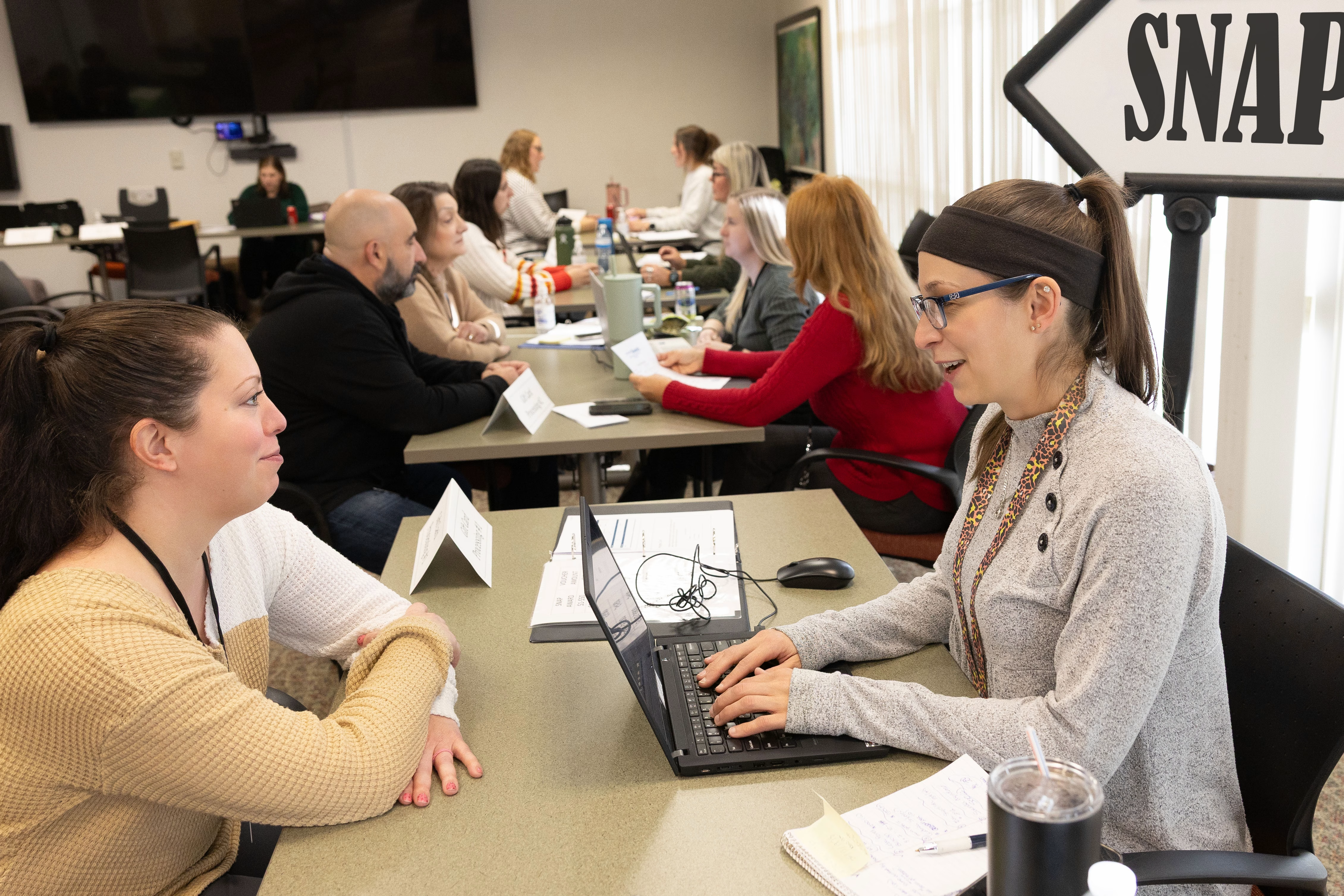
Mid-November brought unsettling news: Supplemental Nutrition Assistance Program (SNAP) benefits were to be paused due to the government shutdown. For many in our community, that moment marked the beginning of uncertainty, fear and a question no one should ever have to ask: Will we have enough to eat?
Federation—together with agencies on the front lines of food insecurity—didn’t wait for answers.
The Moment the News Broke
When news of a potential funding pause was announced, Federation jumped into action. Together with Jewish Family Service (JFS), Yad Ezra and others, Federation mobilized emergency funding and expanded food distributions. The goal was simple: keep the lifeline going.
“This was a moment when, as soon as it was known that the SNP program was going to stop in Michigan, Steven Ingber and Federation said, ‘How can we help?!’” shared Perry Ohren, CEO of JFS. He added, “Social problems are equal opportunity employers. In this case, there are Jews who struggle with poverty, many of whom receive SNAP.”
A Surge in Need
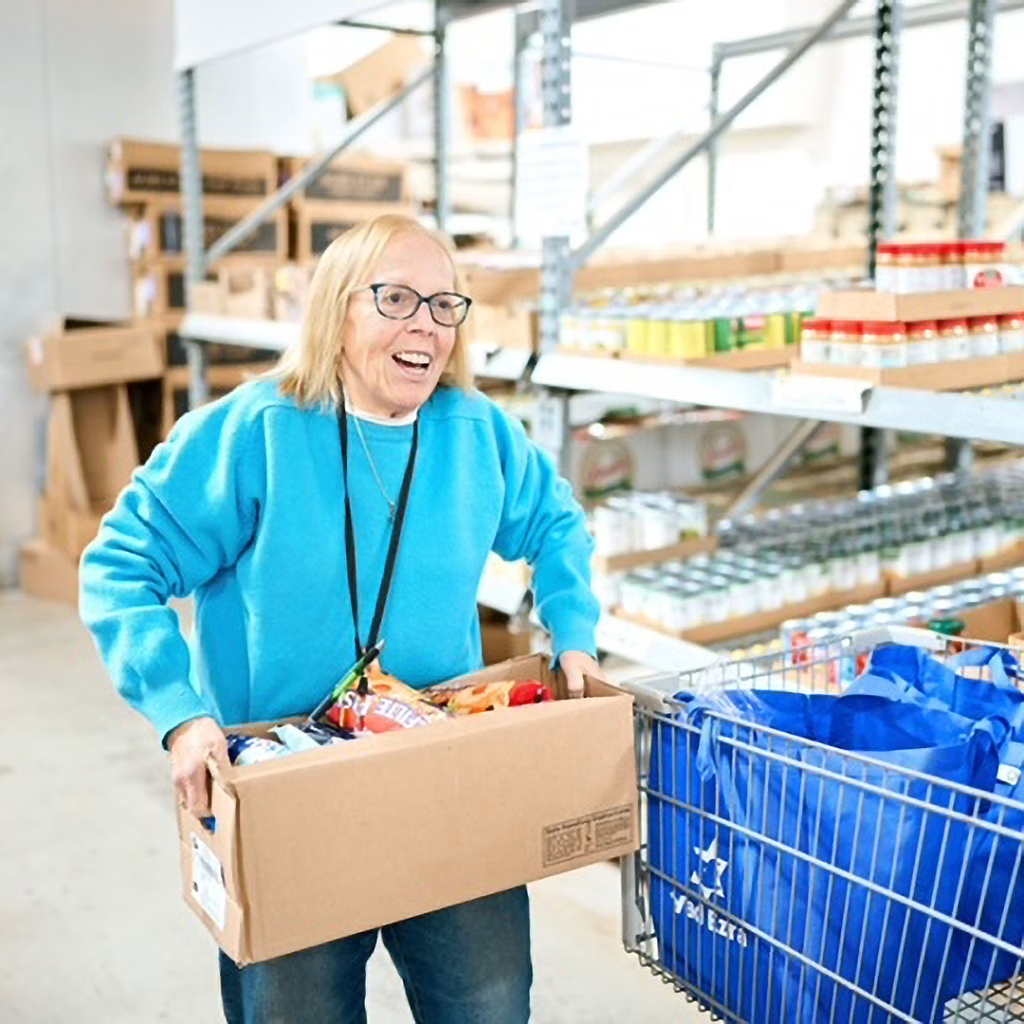
The impact was immediate. On the very first day of the shutdown, Yad Ezra—our community’s kosher food pantry—saw double the usual number of clients. While Yad Ezra is not a partner agency, Federation stepped in to make sure their shelves stayed stocked and their client’s needs were met. Federation also worked directly with United Way to help expand resources to the broader community.
Stories Behind the Numbers
JFS coordinated an all-hands-on-deck response, supported by Federation. “In just days, we distributed $77,525 in food assistance to 334 households, totaling 1,102 individuals who didn’t have to wonder where their next meal would come from,” said Ohren.
Behind those numbers are real people—and powerful stories. One older gentleman came to JFS for help. Assisted by Russian-speaking staff, they learned he was born in 1939 in Kharkiv, Ukraine. This discovery opened the door to possible additional support, as he could qualify as a Nazi Victim and be eligible for resources funded by the Claims Conference. JFS staff got to work, helping him gather documentation and file forms within a week. Today, he’s enrolled as a JFS client and, as a newly recognized Holocaust survivor, will receive ongoing support—proof that a moment of crisis can lead to lasting care.
A Safety Net in Action
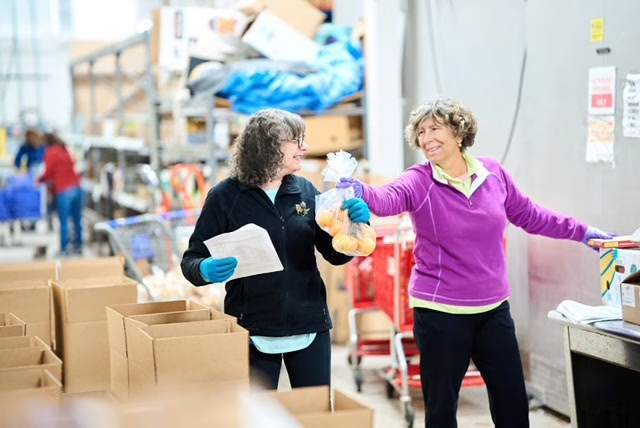
“Over the years, Federation has built a powerful safety net with our partner agencies and other Jewish social service organizations across the community,” said Steven Ingber, Federation CEO. “These relationships aren’t new; they’re part of a longstanding ecosystem that ensures no one in our community faces hardship alone. What’s different now is the speed and scale of the response.”
“The moment SNAP benefits were paused, we were able to immediately provide funding to community agencies and expand food distributions. That kind of rapid, coordinated action is only possible because of the trust and infrastructure we’ve built together over many years.”
A Crisis Within a Crisis
Even before the government shutdown, food insecurity was a growing concern—especially among seniors, single-parent households and lower-income working families. The SNAP pause created a “crisis within a crisis.” Many in our community depend on these benefits to help feed their families. When that lifeline suddenly stops, the ripple effects are immediate and severe.
“That’s why we stepped in right away to fill the gap. Our role is to make sure that no one falls through the cracks—to provide both emergency relief and the long-term support that keeps our community strong and connected,” added Ingber.
Powered by Generosity
Ultimately, this response doesn’t happen in a vacuum. It’s made possible by the generosity of community donors—whose gifts give Federation the flexibility to act quickly when emergencies arise. We’re incredibly grateful to them, and to our partners at JFS, Yad Ezra and others on the frontline of food insecurity, for reminding us what it means to be a caring Jewish community.
This is what Federation is here for: to make sure no one is left behind, and that even in uncertain times, our community remains resilient, compassionate and united.