by Aaron Poris, Senior Associate, Israel & Overseas
Ancient Babylonian Harvests, Spiritual Returns, and Messages of Love
For Jews, the month before Rosh Hashanah is a time when the shofar begins to sound, Selichot enter the picture, and attention turns toward reflection, repentance, and the coming Days of Awe.
But there is a fascinating surprise hidden in the month’s name itself.
The word is Elul (אלול). Despite being one of the most familiar names in the Jewish calendar, Elul is not originally a Hebrew word.
The Babylonian Connection
Elul is derived from the ancient Babylonian/Akkadian month Elūlu, which was associated with the harvest season. Like the names of several other Hebrew months, the name entered Jewish usage during the Babylonian exile and remained part of the Jewish calendar.
That said, the rabbis of old found a beautiful Hebrew meaning hidden in the four letters of Elul, connecting it as an acronym to the famous verse from King Solomon’s Song of Songs:
Ani le-dodi ve-dodi li
אני לדודי ודודי לי
“I am for my beloved, and my beloved is for me.”
So when you hear “Elul” this year, remember that behind those four Hebrew letters lies an ancient journey, from the fields of Mesopotamia to the inner landscape of the Jewish soul.
by Aaron Poris, Senior Associate, Israel & Overseas
Few dishes say Shabbat like Moroccan Jewish Chraime. Tender white fish is gently simmered in a rich tomato sauce infused with garlic, paprika, cumin, turmeric, and fresh cilantro. This recipe calls for tilapia (although cod was used in the pictured example) for an easy, family-friendly take on the Israeli Mizrahi classic, with a medium-plus spice level from hot paprika, Aleppo pepper, fresh jalapeño, and a pinch of red pepper flakes. The result is a vibrant, comforting dish that’s even better when made ahead, with plenty of sauce for soaking up with fresh challah.
Shinshinim are high-school graduates who choose to defer their military service for a year of service abroad. The Shinshinim bring their energy, love of Israel and unique perspectives to our synagogues, schools and Jewish Community Center through educational lessons, presentations, arts and crafts, music and personal connections with community members of all ages. One of the main objectives of bringing Shinshinim to our community is to encourage Israeli engagement that ultimately builds a bridge between Michigan and Israel.
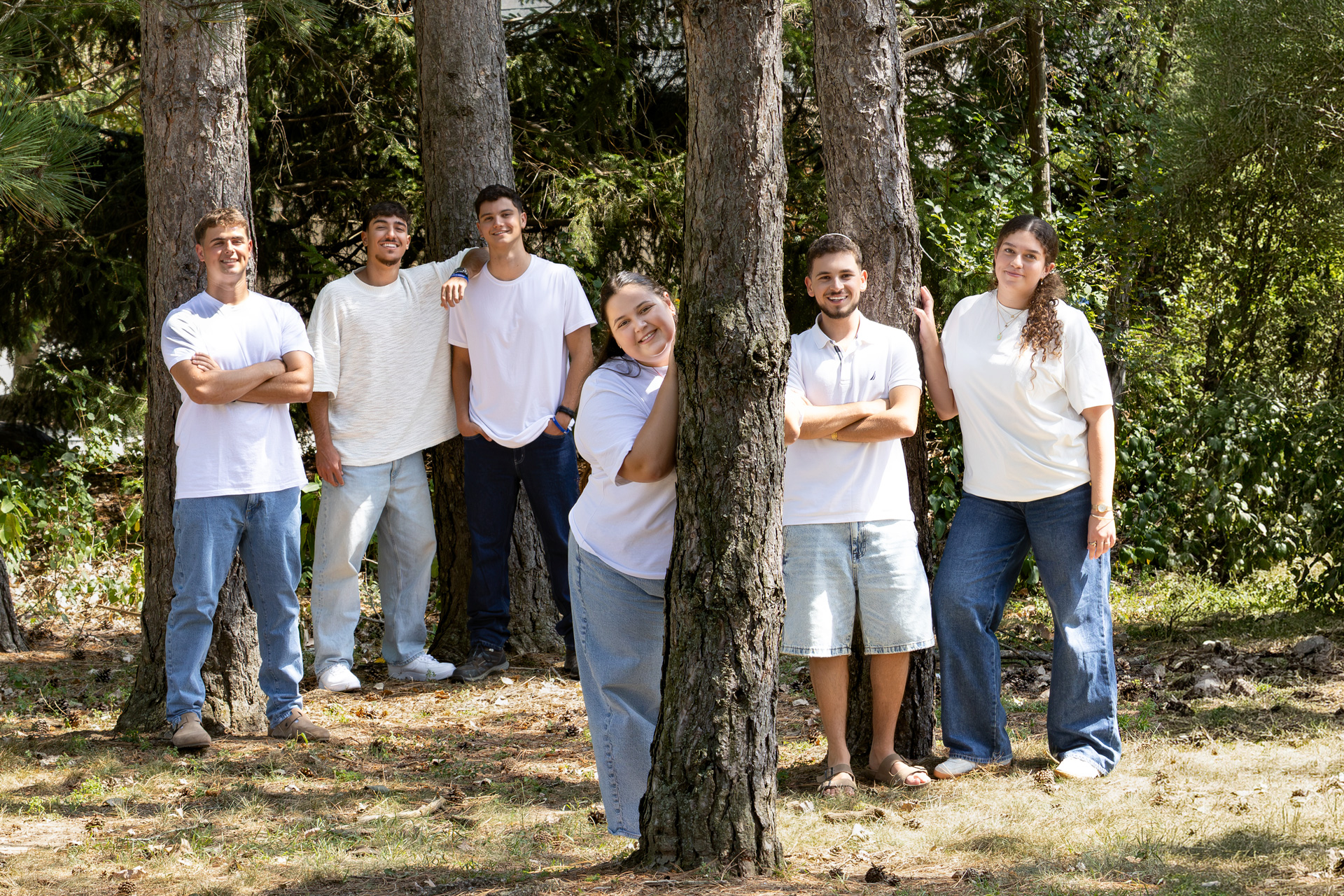
The time has come to welcome Metro Detroit’s newest Shinshinim Israeli Volunteers! As one group completes its amazing year of service in our community and returns home to Israel, a new group of six amazing young individuals arrive.
Beginning their Shnat Sherut (Hebrew for “Year of Service” aka ‘Shin-Shin’) Sunday, August 23… four boys and two girls take their places across the Detroit area. Five of the six are from our partnership region in the central Galilee, with the sixth coming from Efrat.
Lavy, Mia, Or, Ori, Regev, and Shira will be working at FJA, Hillel, Farber, The J, Temple Beth El, Temple Israel, Temple Shir Shalom, Yachad, Adat Shalom, Shaarey Zedek, Young Israel of Southfield, Kehillat Etz Chayim, Jewish Senior Life, BBYO, and more.
They will be involved with Federation events and our Israel and Overseas department; and they are staying with six generous and warm host families for the first part of the year. But we are currently looking for more host families for the second part of the year who can continue to foster and welcome them. If anyone is interested, please reach Rachel Ruskin at ruskin@jewishdetroit.org
JOIN US IN WISHING THEM A WARM WELCOME! ברוכים הבאים!!
As Israel continues to live through uncertainty, security threats, reserve duty, displacement and the daily strain of prolonged crisis, the emotional toll on children and families is becoming harder to ignore.
This month, ICAR (Israel’s Collective Action for Resilience) is focusing on what we may be missing about children’s mental health during prolonged crises. For most children, this is not a single traumatic event followed by recovery. It is a formative period of repeated disruption, stress and adaptation. Children’s struggles do not always appear as clinical symptoms. Our new report explores how children’s wellbeing is shaped not only by direct exposure to trauma, but also by the families, schools, communities and systems that surround them. We hosted a webinar on June 16th titled “When Teens Go Unseen” to explore how Israel can better support children growing up amid ongoing stress.
ICAR continues creating spaces for shared learning, coordination and system-level action. Our webinar on July 8, “Resilience Through Movement,” explored movement-based approaches for regulation, connection and psychosocial resilience. Our Arab-Israeli Mental Health Roundtable, on July 20th, will bring cross-sector partners together to identify what becomes possible if we all work together to design a system that can reach diverse populations.
At the heart of each of these efforts is the same commitment: that Israel’s mental health response must be evidence-informed and built on collaboration.
by Aaron Poris, Senior Associate, Israel & Overseas
From Ancient Atonement to Modern Israeli Affection
Just about anyone who has spent time in Israel has heard this word. Grandmothers say it to grandchildren, shopkeepers to customers, taxi drivers to fares, strangers at bars to each other. Sometimes sincere, sometimes sarcastic, sometimes just habit.
The word is Kapara (כפרה).
Today, Israelis use it to mean anything from “sweetheart” and “darling” to “buddy,” “bro,” or “you legend.” But behind this everyday slang lies a thousand years of history.
The Original Meaning: Atonement
The word kapara (kah-pah-RAH) comes from the Hebrew root כ־פ־ר (k-p-r), associated in Biblical Hebrew with atonement, expiation, and the removal of guilt. The same root appears in:
Yom Kippur (יום כיפור) — the Day of Atonement
Kipper (כִּפֵּר) — to atone
Kapara (כפרה) — atonement, or a substitute that bears punishment in another’s place
The Ritual Connection
The original meaning survives in the pre-Yom Kippur custom of kapparot (כפרות) — in which a chicken, or today often money designated for charity, symbolically bears a person’s sins, preserving the root’s core concept: atonement through substitution.
“May I Be Your Atonement”
Over time, the word took on a more personal meaning.
Traditional Jewish expressions included:
Ani kaparatkha (אני כפרתך) — “I am your atonement”
Tihiyeh kaparati (תהיה כפרתי) — “May you be my atonement”
The sentiment: May any suffering intended for you fall on me instead — essentially, “I’d take a bullet for you.”
A Middle Eastern Influence
TThe affectionate use of kapara was reinforced by Jewish communities from the Arabic-speaking world, where similar expressions existed:
Ana fidak (أنا فداك) — “I sacrifice myself for you”
Namshi kafāra alayk (نمشي كفارة عليك) — “I will go to atonement for you”
When Jews from Iraq, Morocco, Yemen, Egypt, and elsewhere immigrated to Israel, these traditions blended naturally with the Hebrew concept, helping transform kapara into everyday affection.
The Israeli Evolution
The word’s journey: Atonement → Substitute sacrifice → Someone for whom I’d sacrifice myself → Someone dear to me → Sweetheart / Buddy / Bro.
By the late 20th century, kapara had become one of the most recognizable terms in Israeli slang:
Term of endearment:Kapara sheli (כפרה שלי) — “My darling”
Like many slang terms, kapara also developed an ironic edge — conveying affection, frustration, or gentle criticism depending on tone, much like “bro” or “mate” in English.
Why the Word Matters
Few Hebrew slang terms tell such a complete story. A word that once described spiritual atonement became an expression of self-sacrifice, then a declaration of love, and finally one of the most common words in everyday Israeli conversation.
So the next time someone calls you Kapara sheli — remember: hidden inside that simple phrase are centuries of Jewish tradition, Middle Eastern culture, and the remarkable evolution of the Hebrew language.
Beginning in January of this year, Aaron Poris joined the Jewish Federation of Detroit as Senior Associate in the Israel & Overseas Department. His portfolio centers around overseeing JFD Missions abroad, educational and internship programs like “Get There” and “Onward” and planning annual community events for Yom HaAtmaut and Yom Hazikaron. Through programs, partnerships and missions, his work focuses on building meaningful, people-to-people relationships—something he sees as the foundation of any strong community.
Aaron is especially passionate about helping people experience Israel firsthand. He believes that real understanding doesn’t come from a distance, but through direct engagement—with the people, the culture and the complexity of the country itself. His goal is to help participants walk away with a clearer, more nuanced perspective of Israel as it truly is: incredible, strong, diverse, dynamic, imperfect and often misunderstood.
That perspective comes from his own lived experiences.
Born and raised in Metro Detroit to an Israeli mother and American father, Aaron grew up with a strong connection to both communities. After graduating from Wayne State University with a degree in Art Education, he began his career as a K–12 fine arts teacher; and art continues to play an important role in his life today. Aaron works across multiple mediums, including drawing, painting, jewelry, printmaking and ceramics… and he continues to teach ceramics at the Farmington Civic Center (The Hawk).
In 2015, Aaron moved to Israel, a decision rooted in his personal values and desire to more deeply engage with the Jewish state and his heritage. What began as a life transition evolved into a media career. He joined ILTV English News in September 2015, starting in behind-the-scenes editing and going on to eventually become the Lead Anchor and Chief Editor—helping deliver Israeli news and stories to English-speaking audiences around the world.
Then, moving from ILTV to The Media Line news in early 2023, Aaron continued to cover a wide range of stories—spanning culture, society, politics and major regional events including the horrors of October 7, 2023. His work also appeared in outlets such as YNET, JPost and the Jewish Journal.
After nearly a decade in Israel, Aaron returned to Detroit with his wife and daughter—bringing with him both professional experience and a deeper sense of what it means to belong.
What if your next chapter looked like this: a private room in an Israeli community, real relationships with real neighbors, and volunteer work that really matters—not as a tourist, but as a member?
Shnat Sherut 50+, created by Elul in the aftermath of October 7th, invites Jewish adults from around the world to live within Israeli communities that are rebuilding—not just homes and infrastructure, but daily life, connection and a sense of future. This international track opens that experience to participants from abroad.
This is not a short-term volunteer trip. This is a life experience.
Over 8 to 10 months, you will:
Build real relationships with the people around you
Contribute your skills where they are genuinely needed—with a strong focus on English language support in schools and community settings
Experience Israeli life from the inside
Be part of a close-knit cohort of peers on a shared journey
Time commitment Approximately 18–24 hours per week—the rest is yours to explore, rest and enjoy life in Israel.
Opening Seminar September 2026
This program is designed for Jewish adults aged 50 and above, living outside of Israel, with basic Hebrew (support provided before and throughout the program). What matters most is openness, flexibility and a genuine desire to show up.
Communities in Israel aren’t just rebuilding. They’re looking for people. Your presence matters—not only what you do, but the fact that you’re there.
📌 Learn more and apply by contacting Jane Levy at jane@elul.org.il
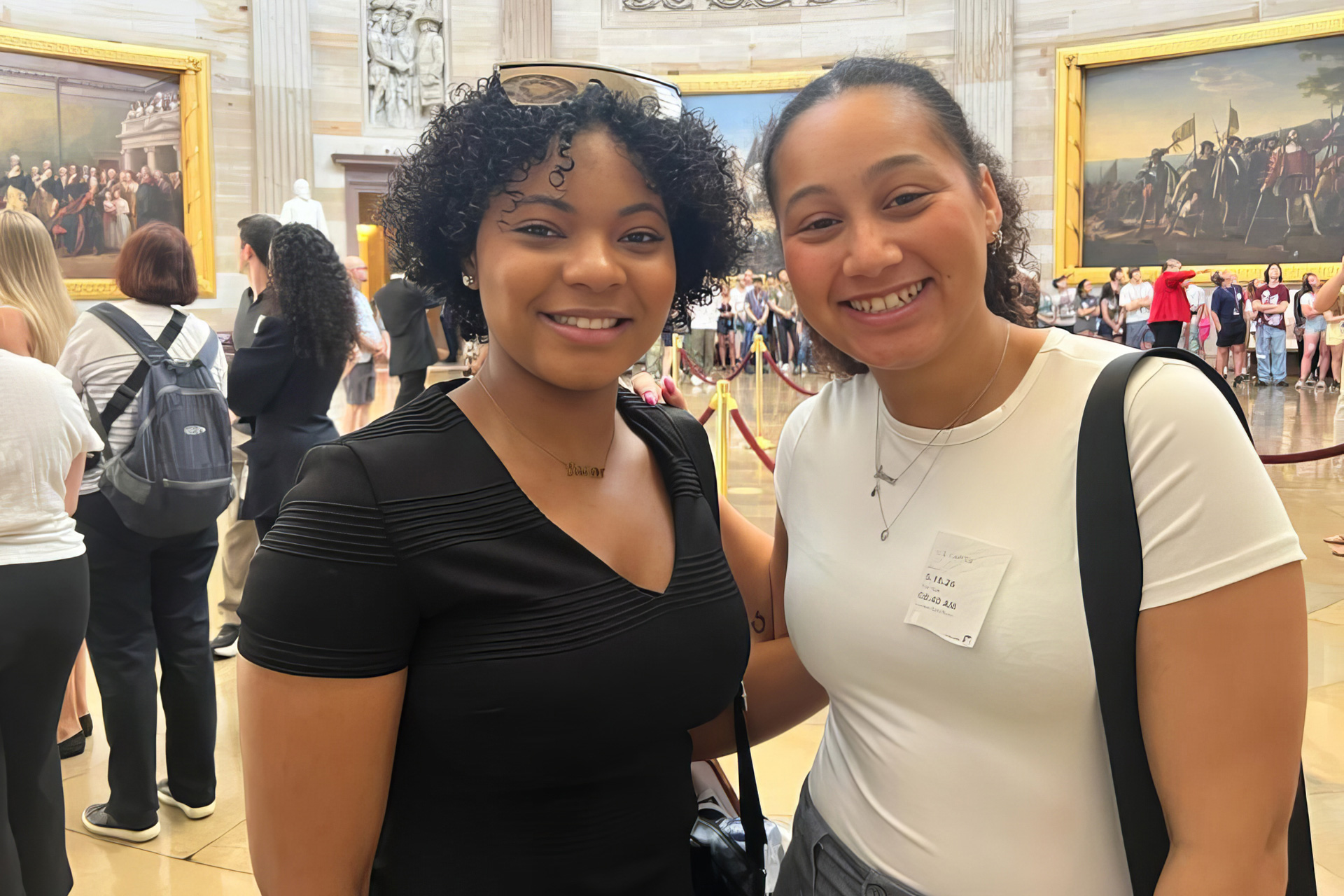
As an Israeli Shinshinit spending a year in Detroit, I recently had the opportunity to participate in a Jewish Federation trip to Washington, D.C., with a group of Jewish and African American high school students. The goal was simple but meaningful: to learn about each other’s communities, build relationships, and better understand why standing together matters.
Throughout the trip, we shared our stories, discussed our identities, and learned about the histories that have shaped our communities. Although we come from different backgrounds, I was surprised by how many common values we share—resilience, pride in our heritage, and a commitment to supporting one another through difficult times.
As an Israeli, this experience felt especially important. Since October 7, I have seen how valuable strong partnerships and genuine allies can be. This trip reminded me that those relationships are built through listening, learning, and honest conversations.
I returned from Washington with new friendships, a broader perspective, and hope for the future. At a time when the world can feel divided, this experience showed me that meaningful connections between communities are not only possible they are essential, and that shaping the future starts now with our youth.
What happens when a group of young Israelis spends a year living, working, and growing inside the Detroit Jewish community? Something meaningful — for everyone. Below, this year’s Shinshinim and several of their host organizations reflect on the connections built, the moments that mattered, and the lasting impressions left on both sides of the Atlantic.
Rachel Ruskin
Senior Associate, Israel & Overseas
Another successful year of Shinshinim in Detroit!
I know firsthand that these relationships with our Shinshinim can last a lifetime. I was in high school when I first met Israelis who came to the States for a significant amount of time. We worked together, spent our days together, made lasting memories together and now, (many) years later, they are still some of my closest friends. They are the first ones who know when I’m coming to Israel, they are the ones I make plans with first, they are the ones who pick me up from the airport, host me for meals and the ones who feel like family.
All these years later, I am so incredibly fortunate to be in the role where I help make those connections. Through all the nostalgia, I am invested in the journey of each of our Shinshinim, current and future. I know that the schools and synagogues where they work aren’t just buildings. One of our Shinshinim this year described Hillel as a magical place that feels like a rainbow. I know that the host families can become true families. Where the hosting experience is reciprocated as soon as the Detroiters visit Israel. I know that the WhatsApp messages between the parents last long after the Shinshin comes home.
The Shinshinim experience is awesome, unique and varied. The backbone of that experience is always the people. The workplace supervisors, the students, the people they mingle with along the way and most certainly the host families. They get to be on this adventure with the Shinshinim in some ways. They can truly shape a Shinshin’s year. We are so grateful to these families.
We are always looking for dedicated family community members who would like to be a part of this experience by hosting a Shinshin. For more information, please reach out to me at ruskin@jewishdetroit.org.
Naveh
Naveh
Shinshin 2025-2026
During this past year, I had the privilege of working at Farber, HDS, Adat Shalom, and YIS. Each of these places gave me unique experiences, meaningful relationships, and memories that I will carry with me for the rest of my life. I learned so much about life, people, relationships, and what it truly means to build a genuine connection to Israel. One of the things that surprised me most was the incredible level of support for Israel within the Detroit Jewish community. Before arriving, I did not know much about the community, but throughout the year I witnessed a deep love for Israel, a strong sense of responsibility, and unwavering support that should never be taken for granted. It was truly inspiring to see the support system that Israel has here, especially during such a challenging time.
This year was incredibly meaningful, and it will stay with me forever. The bridges I built, the relationships I formed with families, students, and community members, and the feeling of becoming part of something larger than myself have all had a profound impact on me. One of the most meaningful parts of my experience was having the opportunity to speak about fallen soldiers, share their stories, and serve as a representative of Israel for an entire year. It was both a great honor and a tremendous responsibility. As I prepare for my military service, I am excited to carry forward everything I have learned, the conversations I have had, and the values I have worked to represent. I leave Detroit with immense gratitude and with memories, lessons, and connections that will remain with me for a lifetime.
Maayan
Maayan
Shinshin 2025-2026
Looking back at this amazing year, all I can say is “wow.” This truly has been the best year of my life. One of the most surprising moments was our very first meeting with the community at the beginning of the year. I was amazed by the strong connections people had with one another and by the incredible warmth I received, even though I came from somewhere else.
Throughout the year, I learned how much a community can impact a person’s life and how meaningful it is to build genuine relationships. I especially enjoyed spending time at my main placement, Hillel Day School, where the students, staff, and families made me feel welcome from day one and helped create memories I will carry with me forever. To the next year’s Shinshinim: you have won the lottery with this community. You are coming to one of the most welcoming, caring, and supportive communities out there. My advice is simple: meet as many people as you can and take every opportunity that comes your way.
Ido
Shinshin 2025-2026
Ido
Putting my time here into words might be a bit hard, but I can definitely say that my year can be defined by cold weather and warm people. My year in the Metro Detroit community allowed me to develop as a person in ways I could not imagine, while pursuing work that has endless meaning and significance.
My favorite part was getting to perform at Frankel Jewish Academy’s town halls and ceremonies like the October 7th Memorial, as it allowed me to share my love for music while taking part in something much bigger than myself! This year has been one I will never forget, and for which I will forever be grateful!
Or
Shinshinit 2025-2026
This year taught me that even during difficult times, I can overcome challenges and handle things I never thought I could. One thing that really surprised me was seeing how Jewish people in Detroit choose to be Jewish every single day. In Israel, being Jewish is something many of us grow up with naturally, but here I saw how much intention, commitment, and love it takes to keep a strong Jewish identity and community.
Or
One of the most meaningful moments for me was seeing so many people come to the Holocaust survivor event that I planned for the community. It reminded me how much people care and how powerful it is when a community comes together for an important cause. I also really enjoyed spending time with the children at my placements, creating fun activities, teaching them about Israel, and building relationships with them. During the year I worked at Temple Israel, the JCC, FJA, and the Federation, and each place taught me something different.
To the next Shinshinim, I would say: enjoy every moment and take every opportunity you get to experience the community and meet new people. Try to do everything you can to make this year meaningful and fulfilling. A year sounds like a long time, but when you’re in a place you truly enjoy, it goes by much faster than you expect.
Bosmat Dovas
Hebrew Dept. Chair & Shinshinim Program Supervisor, Frankel Jewish Academy
Over the past year, our incredible Shinshinim—Oded, Or, and Ido—have brought an unforgettable energy, spirit, and creativity to the FJA community. From Oded’s brilliant tech skills, multimedia projects, and ready-to-help smile, to Or’s stunning, professional graphic design and vibrant wall decorations, they have truly left a lasting mark on FJA. Ido kept us all smiling and brought our school ceremonies to life with his incredible dedication, humor, and musical talents, both singing and playing the guitar. Together, their unique personalities, deep friendships with our students, and unwavering dedication have profoundly enriched our school’s connection to Israel and filled our year with joy. Students love spending time with the Shinshinim during classes, lunch, hanging out in their room, and seeing them at school sporting events. The Shinshinim form lasting relationships with FJA students, who even visit them when they go to Israel!
Rabbanit Jenna Englender
Judaic Studies Teacher, Hillel Day School
Each year, Hillel welcomes a group of young Israelis in their shanat sherut, a post-high school, pre-army year of service. These young adults work tirelessly throughout the year, joining classrooms, running programming, and finding unique ways to bring the culture and spirit of Israel into school each day. This year we welcomed Leayah, Maayan, and Naveh. While every cohort leaves its mark on our community, these three quickly became an integral part of school life, building relationships with students and faculty that were genuine and lasting. I would frequently walk the halls in the morning and see children dashing past to greet them with hugs or eager questions about when they would next be visiting their classroom.
One of the goals of Israel education at Hillel is for students to feel deeply that they belong to Israel and that Israel belongs to them. The shinshinim program brings that vision to life. Each year, through their warmth, energy, and authenticity, the shinshinim give students a daily connection to Israeli culture, language, and life that can’t be found in the pages of a textbook.
This year, Leayah, Maayan, and Naveh hit the ground running, finding creative and meaningful ways to bring Israel into the life of our school. Whether helping students experience the atmosphere of Yom HaShoah and Yom HaZikaron as they are observed in Israel, inviting them to engage with current events and Jewish values through collaborative art installations like Wings of Hope, or introducing them to the diversity of Israeli society through a month-long exploration of Israeli food, they consistently transformed abstract ideas into personal experiences. They connected Tanach learning to modern Israeli geography, created opportunities for students to practice conversational Hebrew over lunch, and, in countless small daily interactions, made Israeli culture feel accessible, relevant, and alive.
Most importantly, they made Israel feel personal. For that gift, and for the countless relationships they built along the way, we are deeply grateful. Although their year at Hillel has come to an end, the connections they fostered, the programs they created, and the love for Israel they inspired will continue to shape our students for years to come.
Gail Greenberg
Yachad Hebrew School
Israel and Hebrew were once concepts we taught at Yachad, the combined Religious School of Temple Emanu-El and Congregation Beth Shalom. Then we welcomed shinshinim onto our staff and into our community, and everything changed.
Israel was no longer just a place on a map—it was where Itamar made the best shakshuka and taught us how to make it ourselves. It was where Oded showed us how innovation and technology thrive, bringing Judaism and Israel to life through engaging STEM projects. It became a country where snow is a rarity except in a few special places, where you can drive from hiking in the desert to milking cows on a kibbutz in the north (which we did!). Hebrew was no longer just the language of the siddur; it was the language of everyday conversation and became integrated into our school language and culture. Kol hakavod!
Most importantly, Israel became the home of our newest family members—our shinshinim. Through them, Israel was no longer an abstract idea. It became personal, familiar, and deeply connected to our students’ and community member’s lives.
By Lior Zisser-Yogev, Shlicha, Jewish Federation of Detroit
When I first arrived in Michigan in July 2002, I was amazed by the incredible nature and serenity of the woods of Tamarack, the pouring rain in the middle of summer, raccoons and deer and other wildlife that, until then, I had only seen in Disney movies, and fireflies—which I believed were actually fairies. In fact, I believe that to this day.
But what astonished me the most was the Detroit Jewish community—a community that showed me Judaism can be fun, can be uniting and can bring us together. A community that opened their homes to me and 300 other Israeli teens. A community that took us in as their own and kept this relationship going.
And when I returned here in August 2023, this time not as a 14-year-old, but with my family—Gil, Zeve and Rona—I felt like I was coming back home.
We spent two perfect months here in Michigan—two months that were taken out of a dream, filled with sunshine, new friends, trips in Northern Michigan and lots of food for lots of squirrels. Never in our wildest dreams could we have hoped for a better place to come to on our Shlichut. Two months in which we acclimated to our new home and to our new community, before the terrible day of October 7, 2023.
In these moments of tragedy and pain, this community that we still hadn’t gotten to really know showed up for us.
You showed up 3,000 strong to support Israel only two days after October 7th, and there in Shaarey Zedek, you held me during the most difficult and most painful moment of my life.
You showed up while we were in Israel at my brother Ilay’s Shiva. This community collected letters and drawings full of kind, encouraging and supportive words from all of my daughters’ new friends at Hillel (Zeve and Rona still couldn’t even speak, let alone read, in English) and sent them to us in Israel.
For weeks after we returned to Michigan, you showed up at our door every night with dinner on a Meal Train, so that we wouldn’t have to cook g-d forbid (this is a well-known Jewish instinct).
2,300 Jewish Detroiters showed up at the Detroit Zoo to march with Israeli flags and shout in one voice עם ישראל חי in the midst of war and loss. And a year later , returned to the zoo in pouring rain that could have easily canceled the event. But that’s not what we do here in Detroit. We show up.
This community answered every single question and post I wrote in the Jewish moms’ group, providing answers to questions I didn’t know I had! I am telling you, Jewish Moms is 10 times better than any chat GPT or AI LLM.
Our dear friends showed up for us when Rona was at the hospital with appendicitis. Brought us games and books and a full Kosher for Passover Seder dinner so that we don’t have to eat hospital food for Pesach.
You showed up when we hosted “Running with Zisser”, the running initiative in memory of my brother Ilay z”l, at Tamarack where he was a camper in 2010; at Hillel Day School where my daughters are students, and when last year’s 8th graders dedicated a Torah Cover and case in his memory.
My Federation community, my work family, showed up for me every single day. The Israel and Overseas team in Federation supported every initiative, program, activity or whim I thought of and backed me up on every random idea to bring more of Israel to Detroit, and supported me so that my dreams would become a reality.
I want to say TODA to all of you for making these 3 years of Shlichut so remarkable for me and my family. We made relationships and connections here that can never fade. Toda to all those who invited us, for Shabbat dinner, for brunch on Sunday, for Thanksgiving dinner or for every Erev Chag, those who invited us to synagogue and Temple for services and to give a Dvar Israel, those who invited us to stay at your place up north, invited us to an event for the organization you’re involved with, to a playdate for the girls, to a birthday party, to a camp friends meet-up, to trick or treat in your subdivision, to a PTO activity at Hillel, to professional development for Jewish educators, to a guys nights out with whiskey tasting and mingling, to Girl Scouts, or to a cup of coffee at Starbucks, or Lucky’s, or Soul Cafe.
For inviting us to be a part of this community. For inviting us to belong. And we felt invited, and we feel that we belong.
Coming here to Michigan was the best thing we have done as a family, and these three years shaped who we are as people and who we always will be.
Toda for being our Home and our Mishpacha. We love and appreciate you all.
Thanks for subscribing!
We are so glad that you would like to receive digital communications from the Jewish Federation of Detroit. Complete the form below to opt back in. NOTE: It will take 2-3 business days for you to receive our emails. For any questions, please email subscribe@jewishdetroit.org.
You can see how this popup was set up in our step-by-step guide: https://wppopupmaker.com/guides/auto-opening-announcement-popups/